Hot Tub Cover Replacement: The Complete Guide for Canadian Homeowners
Posted by Northern Hot Tub Covers on 16th Jan 2026
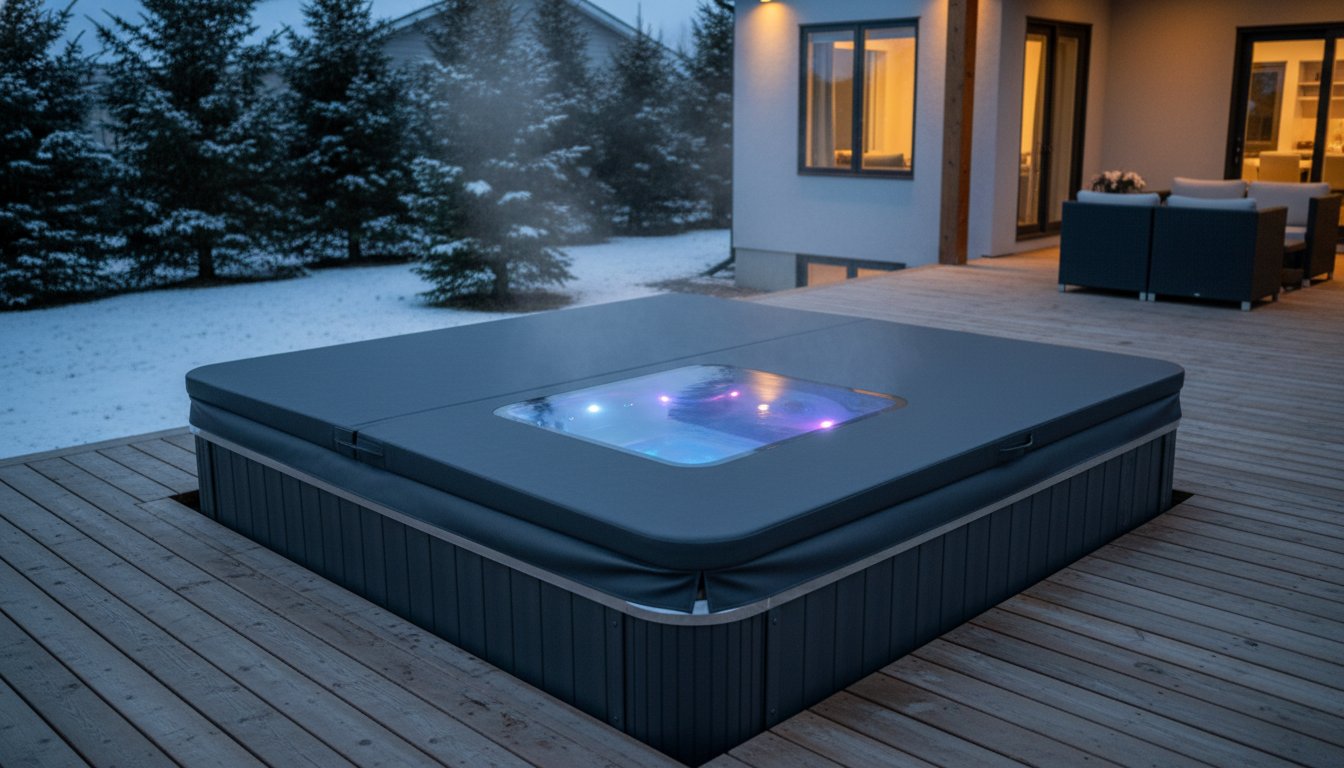
Is lifting your hot tub cover becoming a two-person job? Are you wincing at your hydro bill each month, knowing your worn-out cover is letting precious heat escape into the Canadian winter air? That heavy, cracked, and inefficient lid isn't just an annoyance; it's costing you money and enjoyment. A proper hot tub cover replacement is one of the smartest investments you can make for your spa, especially here in Canada where a quality cover is not a luxury—it's a necessity.
We understand that the fear of ordering the wrong size or choosing a cover that can't handle a heavy snow load can be overwhelming. That’s why we created this complete guide. We take the guesswork out of the process with a no-nonsense, step-by-step plan to help you accurately measure, choose, and install the perfect, lightweight cover. You'll gain the confidence to select a superior, energy-efficient model that fits flawlessly and protects your investment for years to come.
When to Replace Your Hot Tub Cover: 5 Telltale Signs
Your hot tub cover is more than just a lid; it’s a critical investment in your spa's efficiency, safety, and longevity. A high-quality cover, built for the Canadian climate, is the single most important factor in keeping your hydro bills low. While many people understand - what is a hot tub in terms of relaxation, they often overlook the hidden costs of keeping an old, failing cover. Ignoring the warning signs doesn't just cost you money—it can lead to damage to your spa and cover lifter. Recognizing when a simple repair isn't enough is key to protecting your investment, and a timely hot tub cover replacement will pay for itself in energy savings.
Sign 1: It's Heavy and Waterlogged
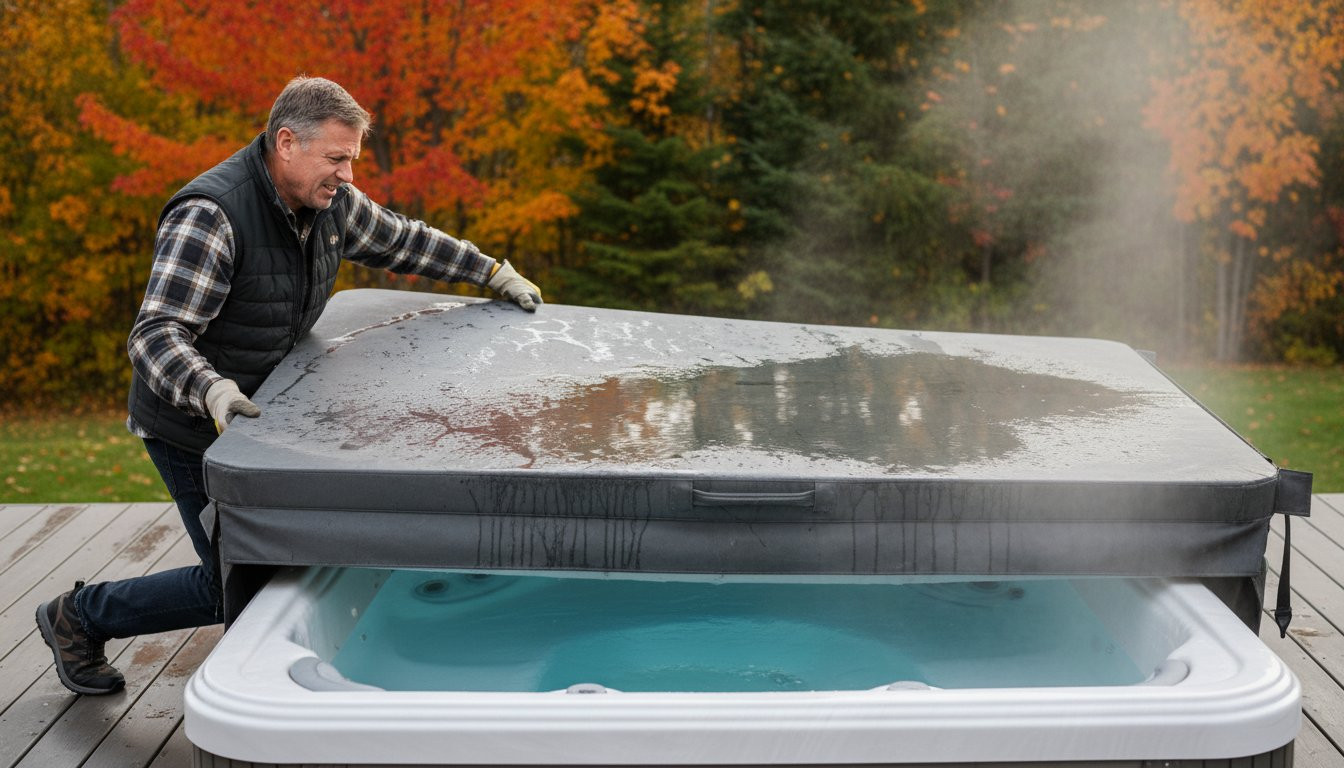
This is the number one reason for replacing a spa cover. Over time, the protective vapour barrier seal surrounding the foam core breaks down, allowing steam and moisture to saturate the insulation. This waterlogged foam becomes incredibly heavy. If your cover now requires two people to lift or puts a serious strain on your cover lifter, it’s a clear sign of failure. This excess weight is not only inconvenient but also a safety hazard. A heavy, saturated cover has lost its insulating properties and is costing you money every day.
Sign 2: The Vinyl is Cracked, Torn, or Brittle
The outer vinyl skin is your cover's first line of defence against the elements. Years of exposure to harsh Canadian UV rays and spa chemicals will eventually cause the material to degrade. Look for cracks, peeling, or tears in the vinyl. Once the exterior is compromised, water can enter the foam core directly, rapidly accelerating waterlogging and heat loss. Brittle, flaky vinyl is a sign of advanced material failure, meaning the cover can no longer provide a proper seal or adequate insulation for your hot tub.
Sign 3: The Seam (Hinge) is Ripped or Broken
The central hinge that allows your cover to fold is a common point of failure and a major source of heat loss. A ripped or broken seam creates a direct vent for steam to escape, forcing your heater to work overtime to maintain the water temperature. This is like leaving a window open in your house all winter. A compromised hinge also weakens the cover's structural integrity, making it less safe and more difficult to handle. A proper hot tub cover replacement ensures this critical area is reinforced and fully insulated.
How to Measure for a Replacement Hot Tub Cover (The No-Mistake Method)
An accurate measurement is the single most important step in your hot tub cover replacement journey. A perfect fit guarantees a superior seal, which is essential for trapping heat, reducing energy costs, and keeping debris out—especially during harsh Canadian winters. While you may know your spa's make and model, wear and tear can slightly alter its shape over time. Never rely on the manufacturer's listed dimensions. By measuring your actual tub with this no-mistake method, we guarantee you'll get a cover that performs flawlessly.
Measuring Shape and Dimensions (Length x Width)
Getting the basic dimensions right is the foundation of a perfect fit. Follow these precise steps for your spa's shape:
- For Square or Rectangular Spas: Measure the outer lip of the acrylic shell from one edge to the other. To account for any warping, take this measurement in two different places for both the length and the width. Always use the larger of the two numbers for your final dimension.
- For Round Spas: Measure the diameter straight across the widest point of the spa, from outer lip to outer lip.
Pro Tip: Once you have your final length and width (or diameter), add 0.5 to 1 inch to each measurement. This slight overhang is critical for creating the tight, energy-saving seal that defines high-quality, energy-efficient hot tub covers and prevents precious heat from escaping.
Getting the Corner Radius Right
Measuring the corner radius is the most common source of error, but it's simple when you know how. The radius refers to how rounded your spa's corners are. To measure it correctly, place a carpenter's square (or two straight rulers forming a 90-degree angle) snugly against one of the corners. The distance from the inside corner of your square to the point where the tub's corner first touches it is your corner radius. A perfect radius measurement ensures your cover sits flush with no gaps.
Measuring Skirt Length and Strap Locations
The skirt is the flap of material that hangs down from the edge of the cover. Its job is to protect your spa's acrylic shell from UV damage and weathering. To measure the skirt length, simply measure from the top of the hot tub's lip down to where you want the skirt to end, which is typically the bottom of the acrylic shell. Finally, if you plan to reuse your existing cover clips, note the location of your tie-down straps by measuring from the edge of the cover to the center of each strap.
Choosing the Right Replacement Cover: Key Features for the Canadian Climate
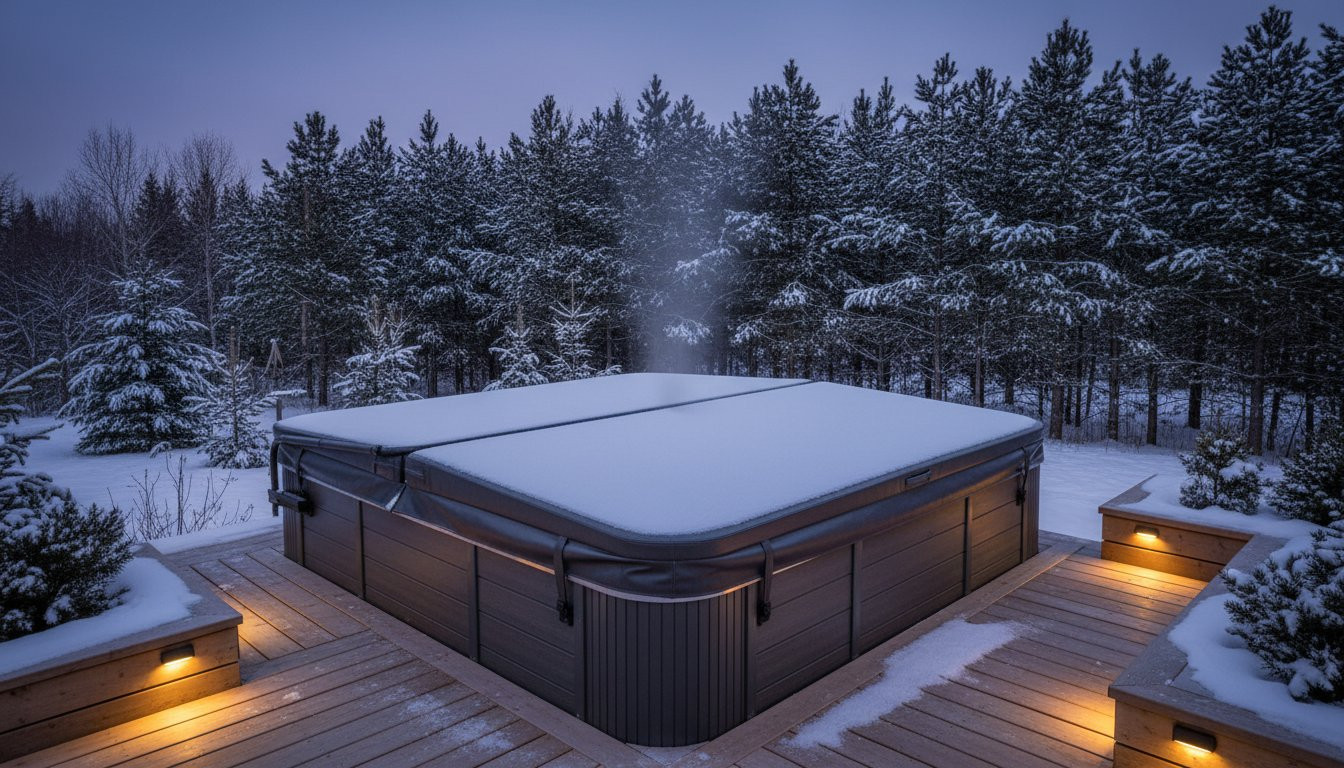
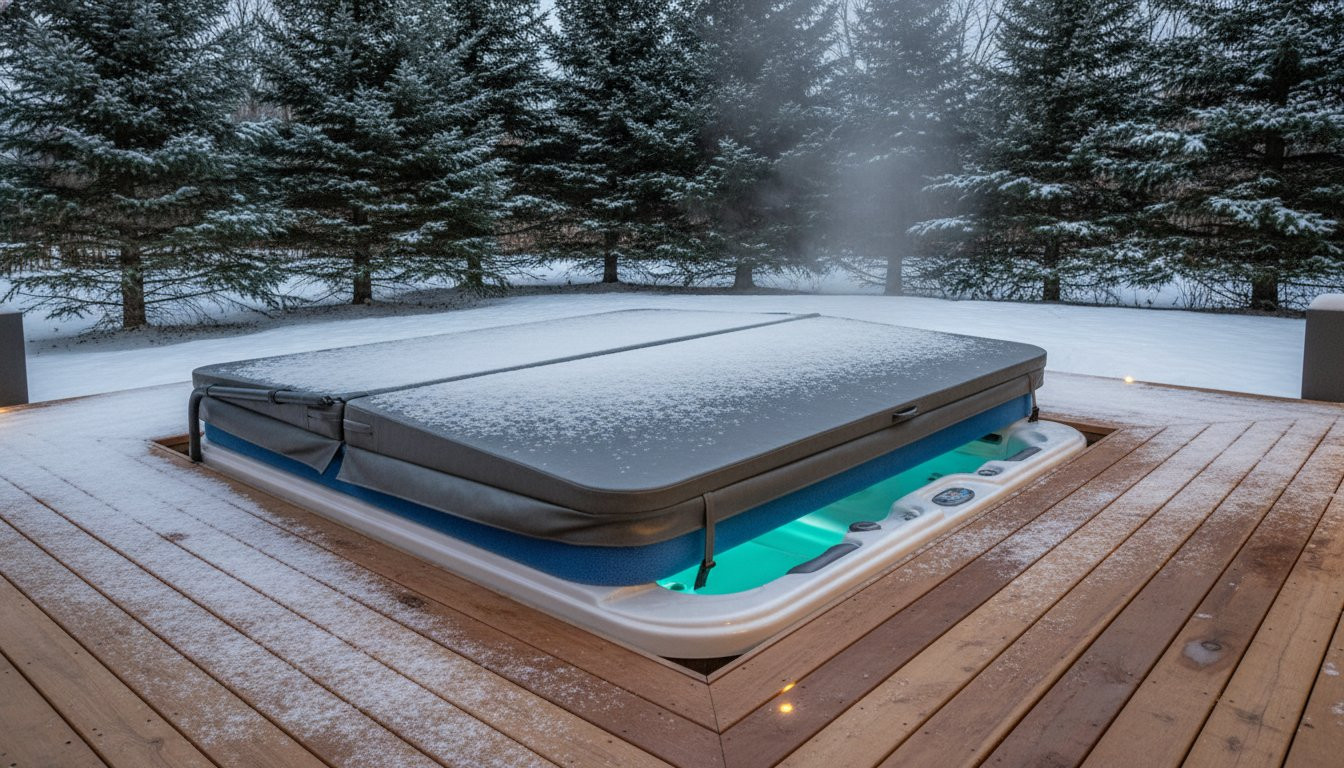
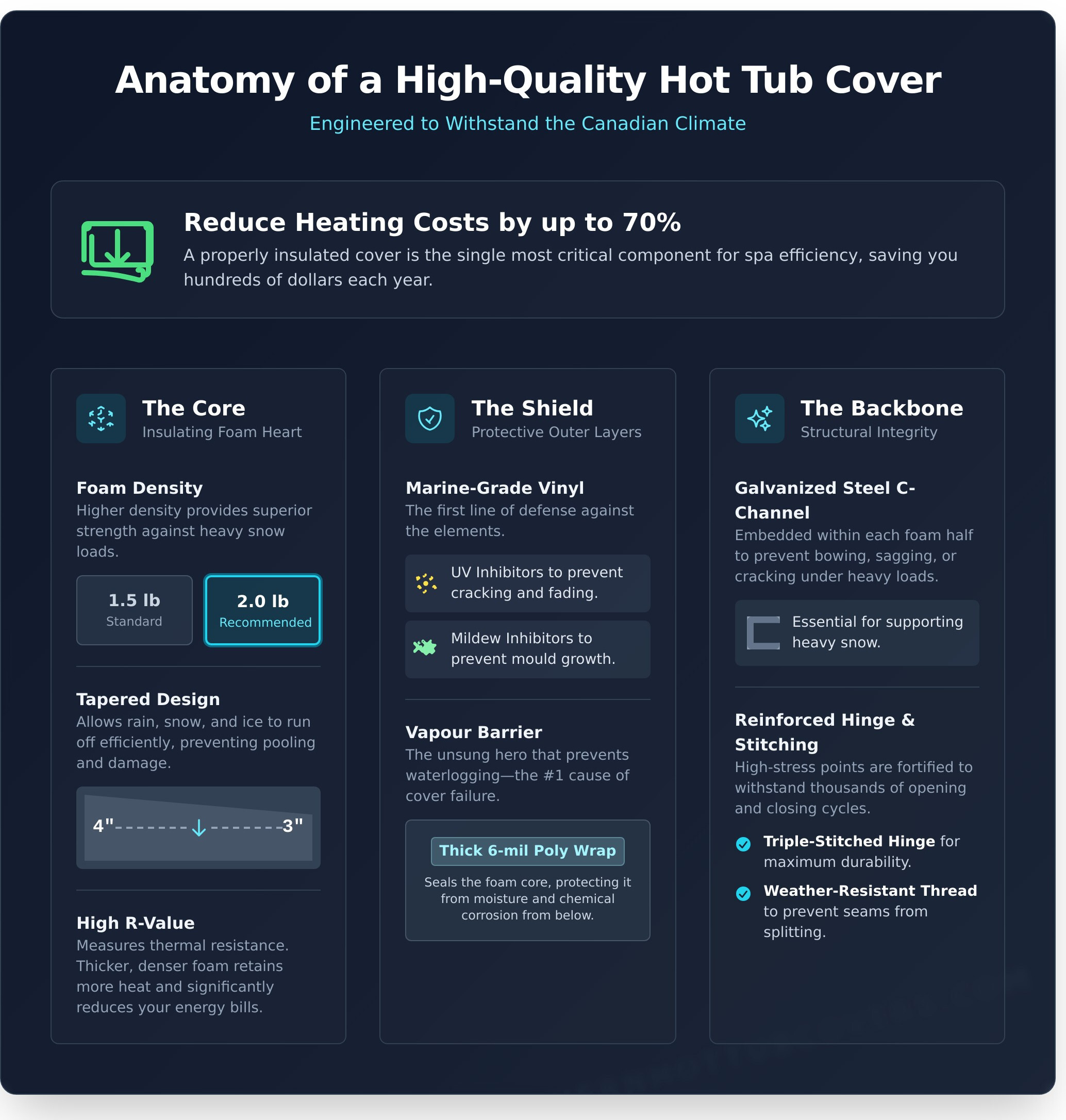
Not all hot tub covers are created equal, and this is especially true for our harsh Canadian winters. A cheap, poorly made cover will quickly become a heavy, waterlogged liability, costing you more in energy bills and premature failure. When it's time for a hot tub cover replacement, investing in the right features is critical for handling heavy snow loads, extreme cold, and saving you money in the long run. Understanding the key components of a quality cover ensures your hot tub stays efficient and protected year-round.
Foam Density and Taper: Your #1 Defense
The core of any cover is its foam insulation. Foam density, measured in pounds (e.g., 1.5lb or 2.0lb), directly impacts its strength and insulating R-value. Higher density foam provides superior insulation, which is essential to reduce pool heating costs by trapping heat. It also better resists water absorption and can support a heavier snow load. A tapered design, such as 5 to 3 inches, is non-negotiable in Canada, as it forces rain and snowmelt to run off instead of pooling and causing damage.
Vapour Barrier: The Unsung Hero of a Long-Lasting Cover
The most common cause of cover failure is waterlogging, and the vapour barrier is your primary defense against it. This plastic wrap seals the foam core, protecting it from steam, condensation, and chemicals from the tub water. A standard barrier is thin and prone to breaking down. A superior cover uses a thick, heavy-duty barrier (at least 6mil) with heat-sealed seams, creating an impenetrable shield that prevents moisture from turning your lightweight cover into an immovable, saturated weight.
Marine-Grade Vinyl and Reinforced Hinges
The outer vinyl skin must withstand everything the Canadian climate throws at it, from intense summer UV rays to frigid winter temperatures. Marine-grade vinyl is treated with UV and mildew inhibitors to prevent fading, cracking, and deterioration. Just as important is the hinge—the cover's spine. A heavily reinforced hinge and multiple, sturdy handles are crucial for durability, ensuring the cover withstands repeated lifting and the stress of snow accumulation without tearing. See how our Canadian-made covers are built for winter.
Ordering, Installing, and Disposing of Your Hot Tub Cover
You've measured your spa and chosen the right materials. Now it's time to complete the final, most satisfying steps in your hot tub cover replacement journey: ordering your new cover, installing it for maximum safety and efficiency, and responsibly disposing of the old one. This last phase ensures your investment is protected from day one.
Placing Your Order with Confidence
Ordering a custom spa cover online is a straightforward process when you work with a company that takes the guesswork out of it. At Northern Hot Tub Covers, our extensive database of spa models makes it easy to get started. Before you finalize your purchase, we recommend you:
- Carefully double-check your measurements against the online order form to guarantee a perfect fit.
- Choose your premium-grade marine vinyl colour and consider essential upgrades. A double-wrapped vapour barrier is a wise investment for harsh Canadian winters, offering superior moisture protection.
- Confirm the production and shipping timelines for your location in Canada. We build our covers right here, ensuring quality control and reasonable delivery times.
Installing Your New Cover and Safety Clips
Your new, lightweight cover will arrive ready to place directly onto your spa. The most critical part of the installation is securing the new locking clips to your spa's cabinet. This is not just a feature—it's an essential safety measure.
Properly installed clips prevent the cover from being lifted by high winds and, more importantly, prevent accidental entry by children or pets. Screw the new clips into place, ensuring the straps are snug enough to create a firm seal but not so tight that they put excessive strain on the seams.
How to Dispose of Your Old Waterlogged Cover
Warning: Your old, waterlogged cover can be dangerously heavy, often weighing over 150 lbs (68 kg). Always have someone help you move it safely. Before taking it anywhere, contact your local municipal landfill or private waste disposal service. Regulations for large item disposal vary across Canadian provinces and cities.
Some facilities may accept the cover whole, while others will require you to break it down. If you need to cut it, a reciprocating saw is the most effective tool. It will slice through the outer vinyl and the dense, water-soaked foam core, allowing you to create smaller, manageable pieces for disposal.
Protect Your Spa with a Superior Canadian-Made Cover
You now understand the telltale signs of a failing cover, the no-mistake method for measuring, and why choosing the right materials is critical for our harsh climate. A successful hot tub cover replacement is about more than just a new lid; it's about preserving your spa’s efficiency and protecting your investment from the elements.
At Northern Hot Tub Covers, we make that process simple and reliable. Every cover is made in Canada, specifically for the Canadian climate. We guarantee a perfect fit for your spa model using our extensive database, and we stand behind our superior craftsmanship with a 5-Year No-Nonsense Warranty. Don’t settle for less when protecting your hot tub.
Ready for a perfect fit and lasting quality? Build your custom, Canadian-made hot tub cover today! Enjoy the peace of mind that comes with a truly durable cover protecting your investment all year round.
Frequently Asked Questions
Can I repair my waterlogged hot tub cover instead of replacing it?
While minor tears in the vinyl can be patched, a waterlogged cover cannot be effectively repaired. The internal foam core has become saturated, making it extremely heavy and losing all its insulating properties. This forces your heater to run constantly. The only practical, long-term solution is a complete hot tub cover replacement to restore energy efficiency and ensure the cover is light enough to lift safely. It's a matter of performance and safety.
How long should a quality replacement hot tub cover last in Canada?
A superior, Canadian-made hot tub cover should last between 5 to 8 years, even with our harsh climate. Durability depends on the quality of the marine-grade vinyl, the density of the foam, and proper care. Using a cover lifter to prevent damage and regularly cleaning the vinyl will maximize its lifespan. Covers not built for heavy snow loads or extreme temperature swings will fail much sooner, which is why we build ours specifically for Canadian conditions.
What is the warranty on a new hot tub cover?
We stand behind our craftsmanship with a 5-Year No-Nonsense Warranty. This is our promise to you that our covers are free from defects in both materials and workmanship. Unlike the prorated warranties from other suppliers, our guarantee is straightforward and dependable. We take pride in building quality products right here in Canada, and our warranty reflects our confidence in the covers we produce for our fellow Canadians.
Will a new, thicker cover really save me money on my electricity bill?
Yes, absolutely. An old, poorly-fitting, or waterlogged cover leaks a tremendous amount of heat, forcing your spa's heater to work overtime. A new, thicker cover with a higher R-value provides superior insulation, trapping heat far more effectively. Many of our customers report saving C$30 or more per month on their hydro bills during the cold Canadian winters. A quality cover is an investment that pays for itself in energy savings.
Do I need a cover lifter for my new replacement cover?
We strongly recommend a cover lifter. It's not just a convenience—it's the single best way to protect your investment. A lifter prevents you from dragging the cover on the ground, which can cause scuffs, tears, and damage to the seams and stitching. By making it easy to handle the cover, a lifter extends its lifespan significantly and makes you more likely to use your hot tub year-round.
What's the difference between a 4-2 inch taper and a 5-3 inch taper?
The numbers refer to the thickness of the foam core, which tapers from the centre fold to the outer edge to allow rain and snowmelt to run off. A 4-2 inch taper is a quality standard, but a 5-3 inch taper is thicker, providing a higher R-value for better insulation and superior strength. For most Canadian climates with significant snowfall, the 5-3 inch taper is the superior choice for maximum energy efficiency and durability.