The Ultimate Insulated Hot Tub Cover for Canadian Winters: A Buyer's Guide
Posted by Northern Hot Tub Covers on 17th Feb 2026
Is your hot tub cover groaning under the weight of snow and ice? Are you tired of wrestling with a heavy, waterlogged lid, only to be hit with a sky-high hydro bill at the end of the month? These are common frustrations for spa owners across the country, and the problem often stems from a cover that simply isn't designed for our climate. A generic cover will crack, sag, and lose its insulating power, costing you money and peace of mind. Investing in the right insulated hot tub cover for the Canadian winter is not a luxury-it's an essential part of protecting your investment.
In this buyer's guide, we cut through the confusion. We provide a no-nonsense look at exactly what features your cover needs to handle heavy snow loads, extreme cold, and keep your heating costs down. You'll discover the critical components-from foam density and vapour barriers to marine-grade vinyl-that separate a quality, long-lasting cover from one that will fail you in a year. Get ready to find a durable, efficient cover that provides real value and keeps your hot tub protected, no matter what the forecast brings.
Key Takeaways
-
Understand why a standard hot tub cover often fails under the weight of Canadian snow and ice, leading to high hydro bills and potential damage.
-
Learn to identify the key features-from foam density to the vapour barrier-that separate a basic lid from a true winter-ready system.
-
Confidently compare models by decoding technical specs such as R-value and taper to choose the best-insulated hot tub cover for the Canadian winter, not just the cheapest.
-
Use our practical checklist to ensure your investment is built to last, providing maximum energy efficiency and protection against the harshest weather.
Table of Contents
Why Your Standard Hot Tub Cover Fails in a Canadian Winter
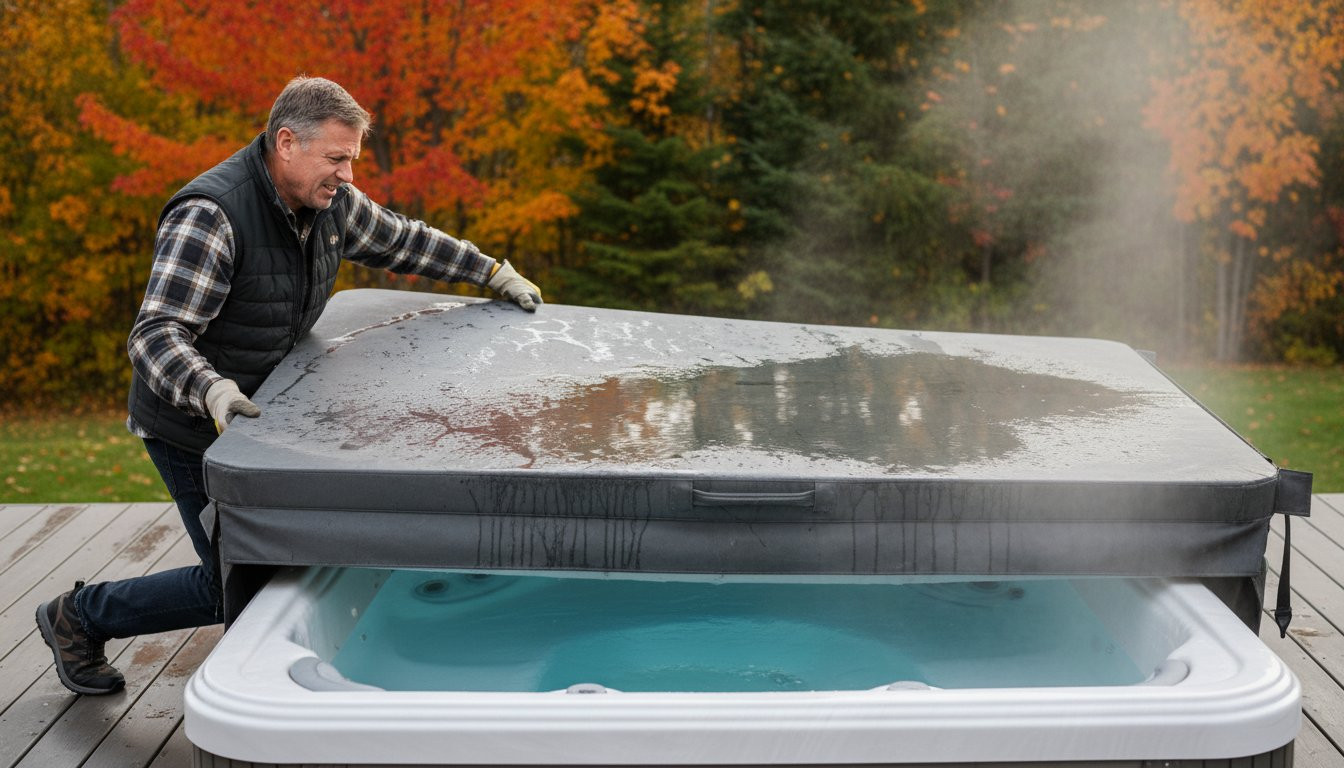
Your hot tub is a year-round oasis, but a Canadian winter puts it to the ultimate test. The factory-supplied cover that came with your spa is simply not designed to handle the unique challenges of our climate: extreme cold, heavy snow loads, and persistent ice. It quickly becomes the weakest link in your hot tub's efficiency, turning from a protective lid into a major financial drain and safety hazard. Investing in a proper insulated hot tub cover for the Canadian winter isn't an upgrade; it's an essential piece of equipment for any Canadian spa owner.
The Silent Killer: Heat Loss and Skyrocketing Energy Bills
A poorly fitting or degraded hot tub cover is like leaving a window wide open in January. Heat, and your money, constantly escape through worn-out seams, compressed hinges, and thinning foam. A high-quality, well-sealed cover can save you upwards of C$40-C$60 per month on your hydro bill compared to a waterlogged or damaged one. When a cover's vapour barrier is compromised and the foam core absorbs water, it becomes a large 'heat sink,' actively pulling heat out of your spa and forcing your heater to work overtime just to maintain the temperature.
The Crushing Problem: Heavy Snow and Ice Load
It’s a scenario every Canadian knows: a heavy, wet snowfall overnight. Just 30 cm of wet snow on a standard 8x8 foot cover can weigh over 500 kilograms (1,200 pounds). Most basic covers cannot withstand this immense pressure. The result is a sagging middle, cracked foam cores, and torn vinyl, which permanently damages the cover's structural integrity and insulating properties. This is why a superior cover with a tapered design is crucial; it allows heavy snow and ice to slide off rather than accumulate and crush the core.
The Cold Crack Catastrophe: When Vinyl Gives Up
Extreme cold makes low-quality vinyl brittle and prone to cracking. Once the outer vinyl shell cracks, moisture penetrates the cover and saturates the foam core, a process known as waterlogging. This not only reduces the cover’s insulating R-value (for a detailed R-value guide, see this resource) but also makes it extremely heavy and difficult to lift. A high-quality insulated hot tub cover for Canadian winters uses marine-grade vinyl with a high cold-crack rating, ensuring it remains flexible and durable even in the harshest sub-zero temperatures.
The Anatomy of a True Winter-Ready Hot Tub Cover
A hot tub cover for our climate isn't just a lid; it's an engineered system designed to combat the cold and save you money. Unlike generic covers often manufactured offshore, a properly insulated hot tub cover for the Canadian winter is built with components that work together to retain heat, resist moisture, and withstand heavy snow. Understanding these parts is the first step to making a smart, long-term investment for your spa.
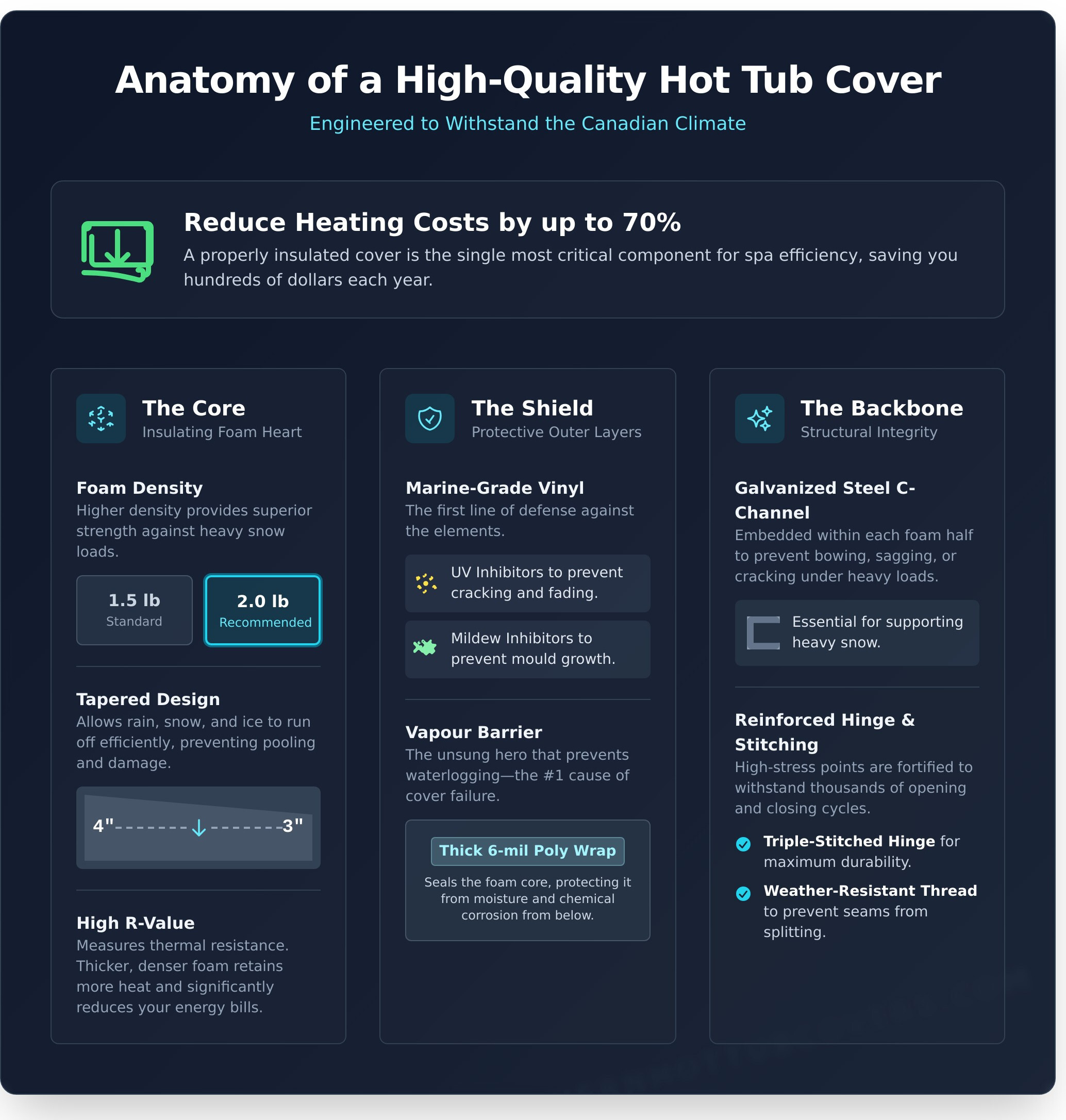
The Core: High-Density Insulating Foam
The heart of any cover is its expanded polystyrene (EPS) foam. This is where the real insulation work happens. The key factor here is density, measured in pounds per cubic foot. A standard 1.0 lb density foam offers basic insulation, but for Canadian winters, we recommend 1.5 lb or 2.0 lb density. Higher-density foam provides a higher R-value, a measure of thermal resistance. As experts in insulation and energy efficiency explain, a higher R-value means less heat escapes, significantly lowering your hydro bills. It also provides greater strength to handle snow accumulation.
The Unsung Hero: The Vapour Barrier Seal
This is the most critical component for the longevity of your cover. Constant steam from your hot tub will penetrate and waterlog the foam core, making the cover heavy and useless. A superior vapour barrier consists of thick poly sheeting that is heat-sealed around the foam, creating an impenetrable envelope. Cheaper covers use thin, flimsy plastic that is simply taped or stapled, which fails quickly and allows moisture to ruin the insulation. A no-nonsense, properly sealed barrier is non-negotiable.
The Outer Shell: Marine-Grade Vinyl Skin
The vinyl skin is your cover's first line of defence against the elements. True 'marine-grade' vinyl is treated with essential UV and mildew inhibitors to prevent fading, cracking, and deterioration. For Canada, a high cold-crack rating is vital to ensure the material remains flexible and does not split during deep freezes. Our covers feature reinforced stitching and a polyester scrim backing for added tear resistance, ensuring they are built to last through years of harsh weather.
The Backbone: Reinforced Steel C-Channel
To prevent a cover from sagging under the weight of rain, ice, and heavy snow, it needs structural reinforcement. A heavy-duty steel C-channel is embedded along the centre of each foam panel, acting as a rigid backbone. This provides the structural integrity needed to withstand a heavy Canadian snow load without bowing or breaking. Thicker, non-recycled metal offers superior strength and durability, ensuring your cover maintains its shape and function season after season.
Decoding the Specs: R-Value, Taper, and Seals Explained
When you're shopping for an insulated hot tub cover for a Canadian winter, the technical specifications can seem overwhelming. But understanding a few key terms-R-value, taper, and seals- is the difference between buying a cover that just fits and investing in one that saves you significant money on your hydro bill. These features are the workhorses that determine a cover's quality, durability, and long-term value, ensuring your spa stays hot, and your costs stay low, even when the temperature plummets.
What is R-Value and How Much Do You Need?
Simply put, R-value is a measure of thermal resistance-how well your cover resists the flow of heat. A higher R-value indicates better insulation and less heat loss from your spa. This is critical for energy efficiency, a factor so important that even the efficiency standards for spas require high-quality covers to meet conservation goals. For the Canadian climate, we recommend the following minimums:
-
Milder Climates (e.g., Coastal BC): An R-value of 12-14 (typically 4-inch foam) is adequate.
-
Most of Canada (e.g., Southern Ontario, Prairies): An R-value of 17-19 (typically 5-inch foam) is the superior choice for balancing cost and performance.
-
Harsh Winters (e.g., Northern Regions): An R-value of 21 or higher (6-inch foam) is a wise investment to combat extreme cold.
Choosing the right R-value directly impacts your heating costs. See the R-values of our Canadian-made hot tub covers.
The Importance of a Tapered Design
A flat hot tub cover is a recipe for disaster in Canada. Rain and melting snow will pool in the middle, adding immense weight that can saturate the foam core and eventually break the cover. A tapered design solves this problem. A cover with a 5-to-3 inch taper, for example, is 5 inches thick at the centre hinge and slopes down to 3 inches at the edges. This smart, simple design ensures that precipitation and snowmelt run right off, protecting your investment from water ingress and heavy ice buildup.
Sealing the Deal: Gaskets, Hinge Seals, and Skirts
The most robust foam core is useless if heat can escape through the gaps. A truly effective insulated hot tub cover for the Canadian winter relies on a complete sealing system:
-
Full-Length Hinge Seal: This insulated "steam stopper" runs the full length of the centre fold, preventing significant heat and steam loss at this vulnerable point.
-
Insulated Gaskets: These are installed at the junction of the two cover halves, providing an additional barrier against escaping steam.
-
The Skirt: This vinyl flap hangs over the acrylic lip of your spa, creating a crucial seal that blocks cold wind from getting under the cover and chilling the water's surface.
A Practical Checklist for Buying Your Insulated Hot Tub Cover
Choosing the right hot tub cover is a significant investment in your spa's efficiency and longevity. To simplify your decision, use this practical checklist. It distills the most critical factors into a simple, scannable guide, helping you select a superior cover that delivers maximum value and performance against harsh Canadian elements.
Insulation and Strength Checklist
The core of any effective insulated hot tub cover for the Canadian winter is its ability to trap heat and withstand heavy snow loads. Don't settle for less than these specifications:
-
Foam Density: Aim for a minimum density of 1.5 lb. This provides the structural integrity and thermal resistance needed to prevent heat loss and sagging under the weight of snow and ice.
-
Foam Thickness & Taper: Look for a cover with at least a 5-to-3 inch taper. This thickness provides excellent insulation, while the taper ensures that rain, snow, and ice melt run off efficiently rather than pooling.
-
Vapour Barrier: Ask about the vapour barrier. A minimum 6 mil thick poly wrap with heat-sealed seams is crucial to prevent the foam core from becoming waterlogged, which is the primary cause of cover failure.
-
Reinforcement: Confirm the cover has a heavy-gauge steel or aluminum C-channel running the length of the foam core. This reinforcement prevents the cover from bowing or breaking under pressure.
Durability and Safety Checklist
A cover's exterior and safety features are just as important as its core. These details distinguish a premium cover from one that will fail within a few seasons.
-
Vinyl Quality: Insist on 100% marine-grade vinyl. This material is specifically designed with UV and mildew inhibitors to resist cracking, fading, and deterioration from sun and chemical exposure.
-
Stitching: Quality is in the details. Look for UV-resistant polyester thread and reinforced, heavy-duty handles that won't rip or degrade over time.
-
Safety Locks: Ensure the cover includes multiple locking straps. These are essential for securing the cover against high winds and preventing unintended access, providing peace of mind for families.
-
Warranty: A manufacturer's confidence is reflected in its warranty. A comprehensive 5-year 'no-nonsense' warranty demonstrates a commitment to quality materials and craftsmanship.
The Final Step: Measuring for a Perfect Fit
Even the best-built insulated hot tub cover for the Canadian winter will fail if it doesn't fit properly. A poor fit creates gaps that allow precious heat to escape, driving up your energy bills. Before ordering, you must have accurate measurements for your spa's length, width, and corner radius. A snug fit is non-negotiable. If you are unsure how to measure, it's always best to seek expert guidance. Let us help you get the perfect fit for your spa.
Protect Your Investment with a True Canadian Winter Cover
Choosing the right insulated hot tub cover for the Canadian winter is the most critical step in protecting your spa and your energy bills. As we've outlined, a standard cover simply won't survive the heavy snow and deep cold. The key is to demand superior specifications: a high R-value for maximum heat retention, a thick foam taper to shed snow and water, and a full-length heat seal to lock out the cold.
Don’t settle for a replacement that will be waterlogged and cracked in a year. At Northern Hot Tub Covers, we build solutions that last because they are Made in Canada for Canadian Winters. We stand behind our superior craftsmanship with a Guaranteed Perfect Fit and a comprehensive 5-Year No-Nonsense Warranty, giving you total peace of mind.
Ready to stop wasting heat and money? Get the durable, efficient cover your hot tub deserves.
Build your custom, winter-proof cover, made for the Canadian climate.
Frequently Asked Questions
How thick should a hot tub cover be for winter in Canada?
For a typical Canadian winter, a cover with a 5-inch to 3-inch taper is the recommended standard. This thickness provides excellent insulation, keeping heat in and reducing your energy bills. For regions with extreme cold and heavy snowfall, such as the Prairies or Northern Ontario, upgrading to a 6-inch to 4-inch taper provides maximum thermal resistance. This heavy-duty construction is specifically designed to withstand the harshest conditions our climate can deliver, ensuring superior performance and durability.
What is the best R-value for a winter hot tub cover?
The R-value measures a cover's ability to resist heat flow; a higher number means better insulation. For the Canadian climate, we recommend an R-value of at least R-18. A cover rated this way significantly reduces heat loss, resulting in lower hydro costs throughout the winter. Investing in a cover with a high R-value is one of the most practical ways to make your hot tub more energy-efficient and affordable to run during the coldest months.
Can a hot tub cover really hold the weight of heavy snow?
Absolutely, but only if it's a quality cover built for Canadian conditions. A standard cover may buckle, but our covers are engineered with heavy-gauge aluminum C-channel supports running the entire length of the foam core. This reinforcement, combined with high-density foam, provides superior strength to handle the heavy, wet snow common across Canada. We build our covers to withstand the elements, giving you peace of mind all winter long without fear of collapse.
How can I prevent my hot tub cover from becoming waterlogged?
A waterlogged cover is a failed cover, and the key to prevention is a superior vapour barrier. Unlike many offshore products, our covers feature a thick, 6-mil poly vapour barrier that is heat-sealed around the foam core. This industrial-grade seal prevents steam and chemical vapours from penetrating and saturating the foam. Maintaining proper water chemistry and regularly cleaning the vinyl exterior also helps prolong the life of this essential protective layer and your cover.
Is it worth paying more for a high-density 1.5 lb foam cover?
Yes, it is a smart investment for any Canadian hot tub owner. Standard covers often use 1.0 lb density foam, which is less durable and provides a lower R-value. Upgrading to 1.5 lb high-density foam significantly improves your cover’s thermal efficiency, saving you money on heating costs. It also offers greater structural strength to resist snow load and prevent sagging over time, ensuring your cover lasts longer and performs better throughout its lifespan.
How long should a good insulated hot tub cover last in Canada?
A high-quality insulated hot tub cover for the Canadian winter should provide reliable performance for 5 to 7 years. Factors such as exposure to direct sunlight, heavy snow loads, and the quality of water chemistry maintenance will influence its lifespan. A cover made from superior materials, such as marine-grade vinyl and high-density foam, will always outlast cheaper alternatives. That is why we stand behind our craftsmanship with a comprehensive "No Nonsense" warranty to give you confidence.
Can I add extra insulation to my existing hot tub cover?
While you cannot effectively add insulation inside a sealed hot tub cover, you can supplement it with a floating thermal blanket. This thin cover floats on the water's surface, reducing evaporation and heat loss. However, if your main cover is old, waterlogged, or damaged, a thermal blanket is only a temporary fix. The most efficient and long-term solution is to invest in a new, properly insulated replacement cover designed specifically for our demanding Canadian climate.